 Türkçe
 English
 العربية
 فارسی

WHAT TO CONSIDER WHEN BUYING CARPET
Quality carpet; It is a carpet that fully meets your needs and will make you happy both while looking at it and using it. However, the factors that determine the quality of the carpet are hidden in technical details such as yarn type, weaving density and pile height.
The type of yarn used in weaving the carpet is one of the most important factors determining the quality. You can use carpets produced with the appropriate yarn type for the area you will use for a longer time.
Another important factor is the yarn density. The more often a carpet is woven, the more durable it is. As a tightly woven carpet will be heavier than others, it will slide more difficult on the floor, but if you are going to buy a carpet with a low weaving density, you should be careful that it has a non-slip base feature.
The pile height of the carpet is another factor that determines its quality. The feeling of your carpet varies according to the pile height, but the main thing here is to choose the most suitable height according to the area of use, not how high the pile is.
Rugs with high weaving density, soft texture, bright colors and bright colors should be your first choice.
A-Thread
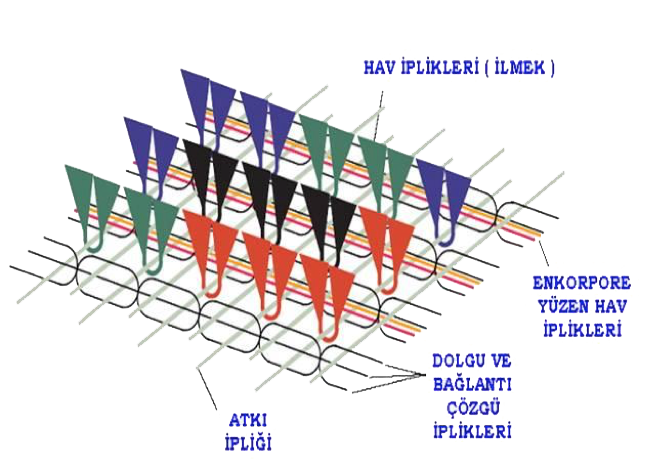
Yarn is the largest of the carpet's main raw material inputs. Because the carpet is made of yarn. While jute or cotton is used as weft on its back, cotton or polyester is used as warp. The part that forms the carpet surface and we see with our eyes is called pile. All kinds of yarn used in the pile add a different structure and color richness to the carpet. Each yarn has its own characteristics and in order for the yarns to exhibit their unique properties in the best way; Rugs made of the right yarn should be selected according to the areas used.
Yarn Types
| Advantage | Disadvantage | |
|---|---|---|
| WOOL |
|
|
| ACRYLIC |
|
|
| Polypropilen |
|
|
| Polyester |
|
|
| polyamide |
|
|
| Note: The above information is valid as long as the instructions for use are followed. | ||
B- Pile Yarn Density (Number of Points)
It is the number of points that form the visible upper surface of the carpet per m2 in the vertical and horizontal directions. It can be described as good quality between 700.000 and 1000.000 points. Dense carpets should be preferred for high strength and long-lasting use.
C- Correct Color and Pattern Selection
When choosing your carpet, which will greatly affect the atmosphere of your home, you should consider; Wall color, curtains, floor covering material and color, furniture, size of your room, amount of light in the room, frequency of use of the room, etc. there are many elements. You can provide a color integrity in your home with a carpet that is compatible with these elements or you can highlight the item you want with the contrast you create.
You can choose the right carpet in the easiest way by installing our Smart Catalog application. You can create a more natural background with a cream color, beige and earth tones carpet. Light colors make your room look wider. Those who want to provide an intimate atmosphere or families with small children can try dark tones.
The pattern and texture of your carpet are as important as the colors for the decoration integrity of your home. Various weaving techniques such as Cut & Loop, Shaggy or Chenille have a unique appearance and are very effective in the quality and design perception of the carpet.